
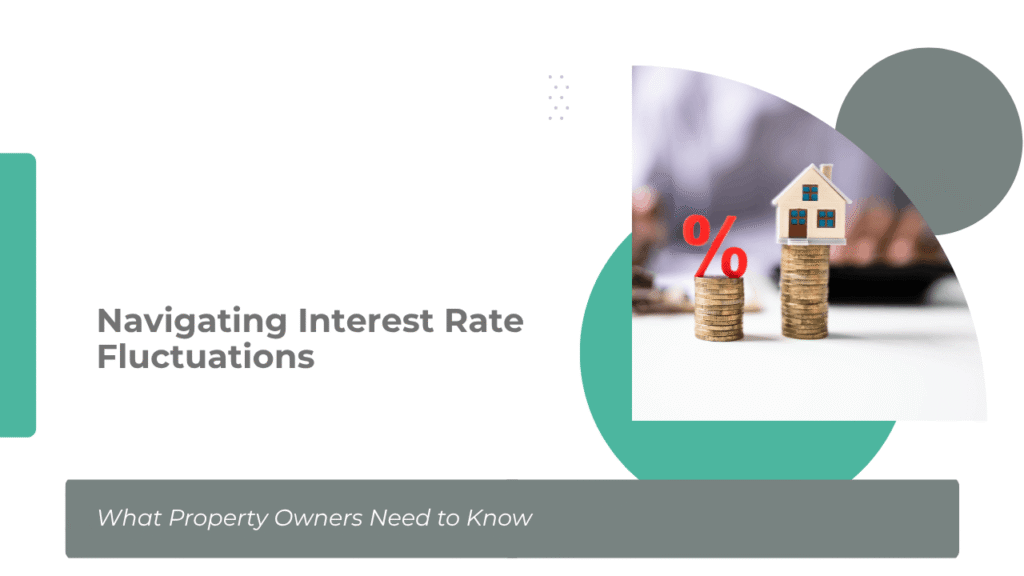
 How are interest rates impacting your investment property?
Understanding how interest rate fluctuations impact your investments has never been more critical. Over the past few years, the financial landscape has shifted dramatically. Rates have risen and fallen in response to economic pressures, inflation, and federal policy decisions, and these changes directly influence borrowing costs, property values, and rental market dynamics.
Quick Summary:
|
Why Interest Rates Matter for Rental Property Owners
Interest rates affect rental property owners in several ways. First, mortgage payments are directly tied to the rate on your loan. Even a modest increase in interest rates can add hundreds of dollars to a monthly payment on an investment property. For owners financing multiple units or carrying adjustable-rate loans, the impact can be significant.
Beyond financing costs, interest rate changes also influence property values. Higher rates generally reduce buyers’ purchasing power, which can slow property appreciation. Lower rates tend to stimulate demand and support price growth. For rental property owners, this dynamic affects both potential resale value and the competitive landscape for attracting tenants.
Impact on the Rental Market
Interest rate fluctuations can also indirectly impact rental demand. When mortgage rates rise, buying a home becomes more expensive, which often pushes more people into the rental market, increasing demand for rental units. When rates decline, homeownership becomes more attainable, and some tenants may exit rentals in favor of buying.
Strategies for Managing Interest Rate Risk
What’s the best way to manage this?
- Refinance When Appropriate
Fixed-rate mortgages can protect owners from rising rates, locking in predictable payments. For those with adjustable-rate loans, monitoring refinancing opportunities is essential to avoid sudden payment increases.
- Stress-Test Cash Flow
Understanding how rate changes affect your property’s profitability is key. Model scenarios for rent, vacancy, and mortgage fluctuations to ensure your investment remains sustainable even in higher-rate environments.
- Diversify Financing Structures
Some investors use a mix of fixed and adjustable rate loans or stagger loan maturities across multiple properties. This approach can help mitigate risk if interest rates spike unexpectedly.
- Adjust Rent Strategically
Rising rates that deter homebuyers can increase rental demand. Property owners can take advantage of this by strategically adjusting rents in line with market conditions while remaining competitive.
Staying Proactive Is Key
 Our real estate market is dynamic, and interest rate changes can ripple through financing, property values, and tenant behavior. Property owners who stay informed and proactive by reviewing loan structures, monitoring the rental market, and planning for different economic scenarios, can turn rate fluctuations from a challenge into an opportunity.
Let’s make sure your property or your entire portfolio is resilient, regardless of where interest rates are landing. Contact us at Trend Property & Management for some additional support. We’re here to help with all your Fort Worth property management needs, and provide services throughout the surrounding Tarrant, Parker, Johnson, Hood, and Denton counties.


 Jason Zimmerman
 Jessica Schirmeister